
Home / Performance Claims / Antimicrobials
PERFORMANCE TECHNOLOGIES · ANTIMICROBIALS
Control microbial growth.
Protect textile performance.
Microbial growth is a persistent challenge across a variety of materials and environments. Antimicrobial technologies provide targeted protection against bacteria, mold, and fungi that can cause unwanted odor, discoloration, and deterioration of textiles and other materials.

Microbial control
Control microbial activity on the textile
Lasting freshness
Address microbially generated malodor
Durable function
Preserve function through wear and care
WHY ANTIMICROBIAL PERFORMANCE MATTERS
Protect the material.
Preserve the experience.
Moisture, skin oils, and everyday soils can provide conditions that support microbial growth. In susceptible textiles, that activity can affect freshness, appearance, and material integrity. A suitable antimicrobial finish acts on the microorganisms behind these changes.
01
Microbial growth control
Inhibit microbial multiplication or reduce viable microorganisms on the treated material. Select the active chemistry for the bacteria, yeasts, or molds relevant to the application.
02
Freshness at the source
Control odor-producing microorganisms to help reduce new malodor formation. This addresses a biological source of odor rather than covering it with fragrance.
03
Material protection
Help protect susceptible materials from microbial staining, mold growth, and deterioration. Match the treatment to the organism and the material problem.
04
Fabric comfort
Added function should preserve the qualities people value in a fabric. Optimize the finish for softness, drape, breathability, color, and appearance.
From apparel and footwear to bedding, upholstery, and technical textiles, the objective is practical: control unwanted microbial activity while maintaining the textile’s intended performance.
HOW ANTIMICROBIALS WORK
Target microbial activity.
Build lasting function.
Antimicrobial agents interact with microbial structures or processes needed for growth and survival. The mechanism depends on the chemistry. Membrane disruption, effects on proteins, and interference with cellular metabolism are established approaches.
01 Membrane integrity
Some antimicrobial chemistries weaken the integrity of microbial membranes. Altered permeability disrupts the cell’s ability to regulate the movement of substances needed for normal function.
02 Cellular function
Other interactions affect proteins, enzymes, or metabolic processes. These effects can compromise cellular function and prevent microorganisms from multiplying or surviving.
03 Durable integration
The treatment must remain available where it is needed. Uniform application, fiber compatibility, and durable fixation connect the chemistry’s activity to performance on the finished textile.
DESIGNED FOR YOUR PROCESS
Measurable performance.
Verified durability.
Verify antimicrobial performance on the treated fabric, then confirm that the function remains after the intended care cycle. Recognized methods provide a basis for comparing results under controlled conditions.
Quantifies antibacterial activity on treated textile materials. Evaluate the bacterial populations under the method’s defined conditions and use the results to assess the intended antibacterial performance.
Determines antibacterial activity of textile products, including nonwovens. Select the inoculation approach appropriate to the textile surface and intended application.
Measures antimicrobial activity under dynamic contact conditions. It is useful for evaluating activity in a controlled suspension test; separate evidence establishes whether an active remains bound to the textile.
Repeat the relevant performance assessment after the specified laundering or care procedure. The wash cycle, number of washes, and remaining activity together describe functional durability.
Select the method and organisms with the laboratory. Evaluate treated and appropriate control fabrics, use suitable recovery and neutralization procedures, and record the contact time and laundering conditions.
SUSTAINABILITY & RESPONSIBLE CHEMISTRY
Effective by design.
Responsible in application.
Performance and responsible chemistry belong in the same development decision. AGS prioritizes durable, non-leaching antimicrobial technologies and considers the people who manufacture, wear, and care for the finished textile.
Non-leaching performance
A non-leaching design keeps the active associated with the treated material instead of depending on its release for antimicrobial action. Retention and release behavior should be established for the intended application.
Renewable chemistry
Renewable feedstocks offer another route to functional chemistry. PureFresh AM34-Bio uses 100% bio-based chemistry, providing an AGS option for antimicrobial performance and odor adsorption.
Durable control of microbial deterioration can support material preservation. Evaluate this benefit alongside formulation safety, processing requirements, and performance after care when assessing the complete textile.
AVAILABLE AGS TECHNOLOGY
PureFresh™ AM34-Bio
A 100% bio-based technology that combines antimicrobial protection with odor adsorption. Its polymer matrix bonds to the treated material for excellent wash durability while maintaining fabric softness and drape.
01 Dual-Action Freshness Protection
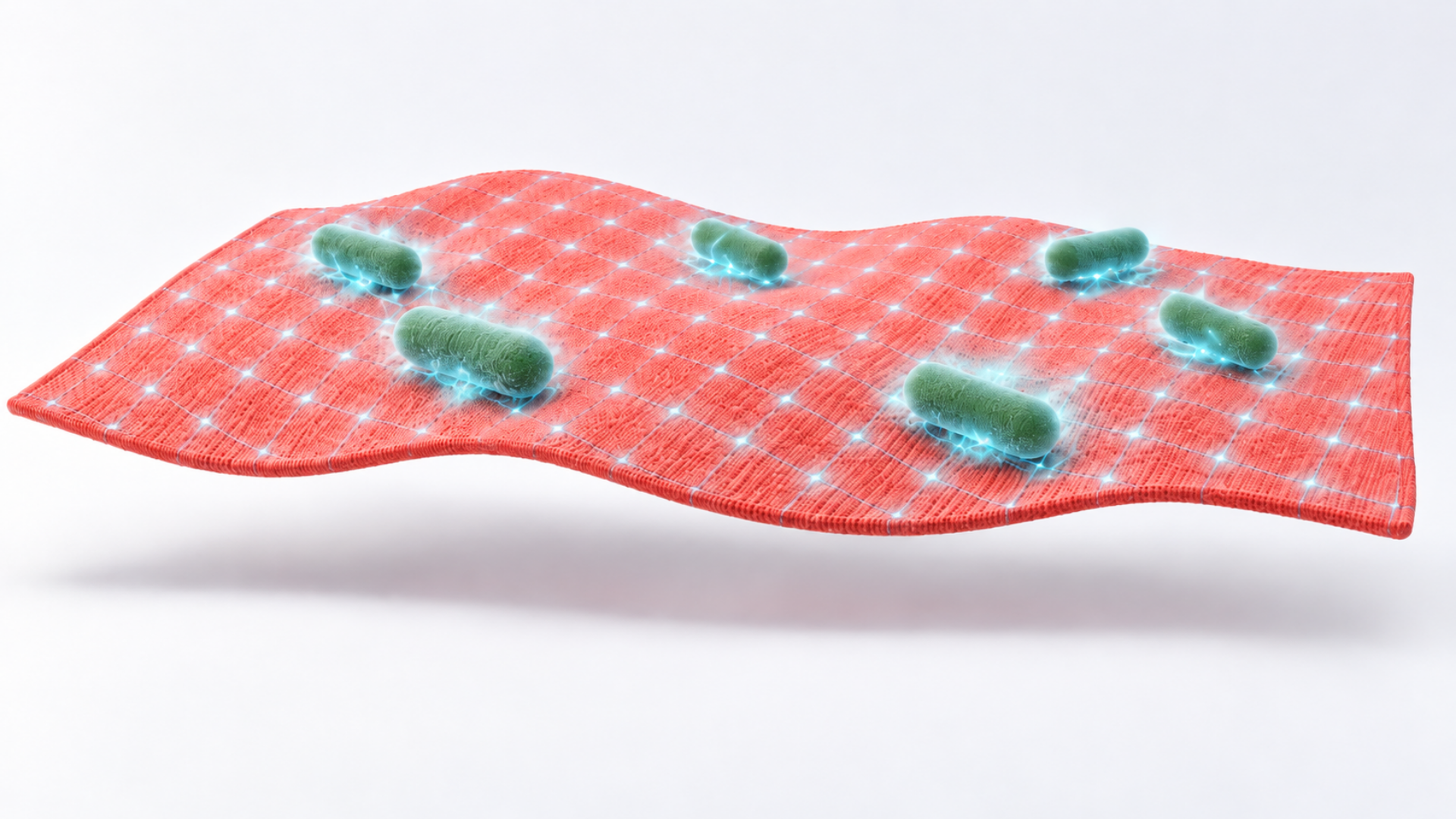
Positively charged amino groups interact with negatively charged microbial surfaces, disrupting membrane integrity and inhibiting growth. The biopolymer captures odor compounds such as ammonia, addressing residual malodor.
02 Non-leaching
Designed for performance through 50 home launderings across a broad range of fibers, including cellulosics, synthetics, recycled materials, and blends.
03 Built For Durability
Designed for performance through 50 home launderings across a broad range of fibers, including cellulosics, synthetics, animal-based fibers, recycled materials, and blends. Select application conditions for the intended fabric.
A CLOSER LOOK
Your questions, answered.
What is antimicrobial textile performance?
It is the ability of a treated textile to inhibit microbial growth or reduce viable microorganisms under defined conditions. The selected chemistry and application determine the organisms affected and the performance achieved.
How does antimicrobial treatment help with odor?
Some microorganisms generate malodor as they metabolize substances such as sweat components and skin oils. Controlling these microorganisms helps reduce new odor formation. Existing odor molecules may still require a separate adsorption mechanism.
Does antimicrobial mean the same thing as antibacterial?
Antibacterial activity concerns bacteria. Antimicrobial is the broader term and can also encompass activity against fungi, including yeasts and molds. The supported spectrum depends on the technology and its evaluation.
What does non-leaching mean?
The antimicrobial active remains associated with the treated material rather than relying on migration into the surrounding environment to work. This property depends on the formulation, fixation, and use conditions and should be supported by suitable evidence.
Does antimicrobial fabric protect the wearer from illness?
Protection of the textile and protection of a person are different claims. Antimicrobial activity measured on a fabric does not, by itself, establish infection prevention or a health benefit to the wearer.
LET’S DEVELOP WHAT’S NEXT
Evaluate the importance of antimicrobial protection for
your next development.
Whether you are developing a fabric, specifying a finish, or building a product range, AGS can help connect antimicrobial performance with your material and commercial goals.